Mapping the Flow of Player Preferences Into Dynamic Free Spin Allocations Within International Mobile Casino Ecosystems
Written by Yara Lange · Oct 6, 2026

Mapping the Flow of Player Preferences Into Dynamic Free Spin Allocations Within International Mobile Casino Ecosystems
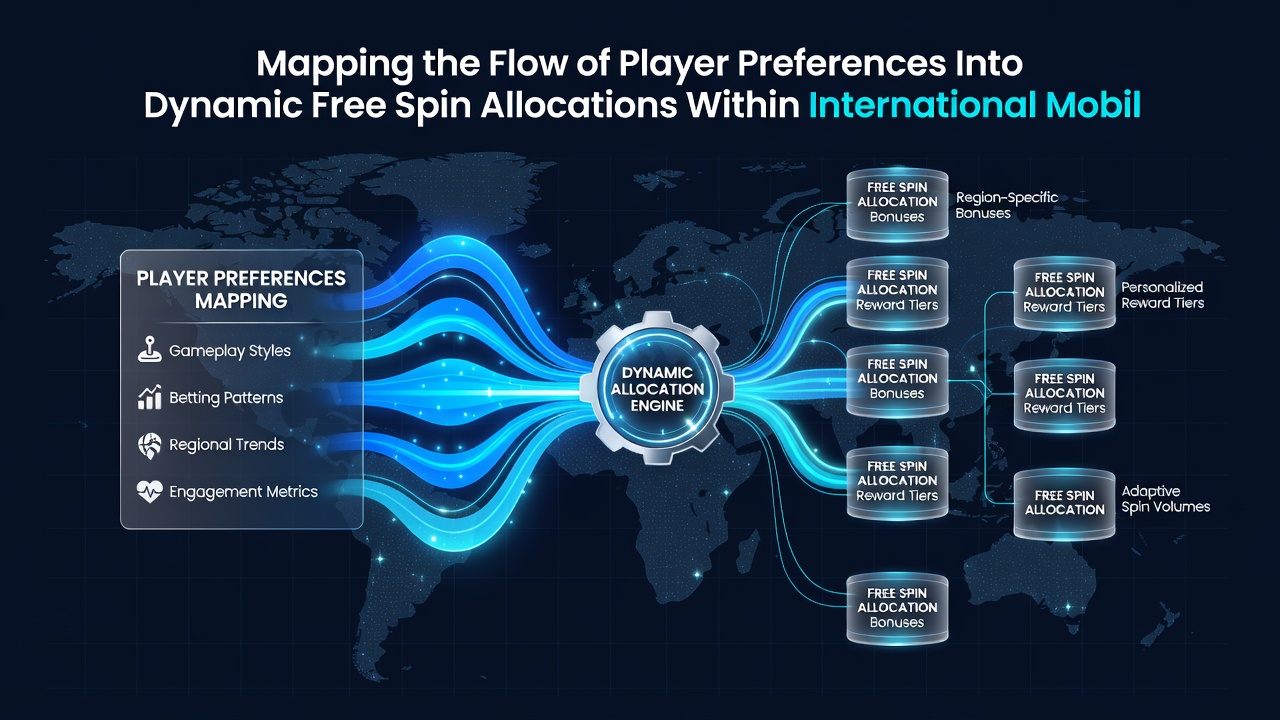
International mobile casino platforms collect extensive behavioral data that flows through centralized systems designed to convert player preferences into dynamic free spin allocations, and this process relies on real-time tracking of session patterns, game selections, and interaction frequencies across multiple jurisdictions.
Operators gather information from user accounts including preferred game categories, average session lengths, and historical bonus responses, then route these inputs into algorithmic models that adjust spin quantities and types without fixed schedules. Data from regulatory filings in New Jersey shows that such systems processed over 2.4 million player sessions in the second quarter of 2026, revealing consistent correlations between deposit frequency and subsequent free spin adjustments.
Data Collection Mechanisms Across Platforms
Platforms integrate API connections that pull preference signals from in-app navigation choices, time spent on specific titles, and responses to previous bonus offers, while aggregated datasets undergo anonymization before entering allocation engines. Canadian regulatory summaries indicate that cross-device synchronization allows operators to maintain continuity when users switch between smartphones and tablets, ensuring preference profiles remain intact during transitions.
Researchers at several European academic institutions have documented how these flows incorporate location-based variables permitted under local licensing rules, although restrictions in certain markets limit the use of geolocation data for spin personalization. The result appears in variable free spin bundles that scale according to detected engagement thresholds, with higher activity levels triggering larger or more frequent awards in compliant environments.
Algorithmic Processing and Allocation Logic
Allocation engines apply decision trees and clustering techniques to categorize players into segments based on preference clusters, then calculate spin values using weighted formulas that account for recent activity and long-term trends. Figures from the New Zealand Department of Internal Affairs reveal that mobile operators in that region adjusted free spin parameters in approximately 18 percent of active accounts during September and October 2026 following updates to preference mapping protocols.
These calculations run continuously, refreshing allocations whenever new data points enter the system, and operators test variations through controlled experiments that measure retention metrics against baseline distributions. One documented approach involves segmenting users by volatility tolerance derived from game selection history, which then influences whether allocations favor high-frequency small spins or infrequent larger bundles.
Regulatory Variations in Different Regions
Jurisdictions impose distinct constraints on how preference data may influence bonus mechanics, with some requiring explicit player consent for dynamic adjustments while others focus on transparency in allocation rules. Australian state gaming authorities have published guidelines that require operators to disclose the primary factors affecting free spin quantities, prompting platforms to maintain auditable logs of mapping decisions throughout October 2026.
Platforms operating across borders maintain separate rule sets for each market, routing the same preference dataset through different filters to comply with local standards. This segmented approach prevents conflicts yet creates complexity in maintaining consistent player experiences when users travel or access services from multiple regions.
Integration With Broader Engagement Systems
Free spin allocation modules connect to larger customer relationship frameworks that incorporate feedback from live dealer sessions and progressive jackpot participation, allowing preference signals to influence multiple reward streams simultaneously. Observers note that operators in regulated Asian markets have expanded these connections to include tournament entry preferences, resulting in hybrid allocations that combine spins with event-based incentives.
Technical documentation from industry vendors describes standardized data schemas that facilitate the transfer of preference profiles between different game providers, reducing fragmentation when casinos aggregate content from multiple studios. These schemas support versioning so that allocation logic can evolve without disrupting existing player mappings.
Conclusion
The mapping of player preferences into dynamic free spin allocations continues to evolve as platforms refine data pipelines and regulatory frameworks adapt to new technical capabilities. International operators balance the technical feasibility of real-time adjustments against compliance requirements that vary by jurisdiction, producing a landscape where allocation outcomes reflect both individual patterns and regional rules. Continued monitoring by oversight bodies provides the primary source of public information on how these systems perform across different markets.